


We hope waiving internet and rental payments during the months of April, May, and June assisted in alleviating any hardship that arose due to the COVID-19 Pandemic.
Effective July 1, 2020, all regular internet and rental payments will resume.
Please contact Administration to make arrangements for payments.
To date, during the pandemic, there has been a distribution of two Meat Packages, four Food Hampers, and two Good Food boxes.
Thank you for the feedback from those in receipt of the Food Hampers.
This notice is to inform you, that there will be no more Meat Packages or larger hampers distributed… read more in the PDF posting below..
Please remain diligent in protecting yourself, your family and the community.
We would like to remind you that there is still risk in traveling outside of the community. Although News outlets have announced that numbers are decreasing, the risk of infection still remains and we ask that for the sake of your loved ones and those most vulnerable in the community, please limit yourself to essential travel only e.g. emergencies, work etc.
Written by Anna Burke at AKC.org

Parvo is every new puppy and dog owner’s worst nightmare. In a matter of days, a perfectly healthy puppy can go from playful and active to fatally ill. Parvo in dogs is a preventable disease, however, all new puppy owners and breeders need to be aware of the risks of parvo, how to prevent it, and what to do if a puppy catches the parvovirus.
Parvo is a highly contagious virus. It causes an infectious gastrointestinal (GI) illness in puppies and young dogs, and without treatment, it is potentially deadly.
Part of what makes the virus so dangerous is the ease with which it is spread through the canine population. The virus spreads either by direct contact with an infected dog, or through feces, and an infected dog can begin shedding the virus four-to-five days after exposure — often before the dog starts exhibiting any clinical signs of infection. The dog will continue to shed the virus while he is sick and for up to 10 days after he has recovered. This means that accurate diagnosis and quarantine are essential for the health of your dog and of other dogs, as well.
Young dogs between six weeks and six months old, unvaccinated or incompletely vaccinated dogs are most at risk for contracting parvo. German Shepherd Dogs, Rottweilers, Doberman Pinschers, English Springer Spaniels, and American Staffordshire Terriers also have an increased risk of contracting the parvovirus, although scientists are not entirely sure why these dog breeds are at a higher risk than others.
Puppies are born with antibodies from their mothers. As these antibodies fade, however, it is up to owners to make sure that the puppies receive a course of parvo vaccinations. The stress of weaning and a secondary parasite or infection, along with parvo, can lead to a more severe case of parvo, which is why it is very important to talk to your vet about the proper care for puppies and pregnant bitches.
The canine parvovirus causes parvo in dogs, and it can be transmitted in two ways. The first is by direct contact through the nose and mouth with infected poop, which can happen when a dog sniffs or licks a surface or another dog that has been contaminated with feces. Since puppies explore their world through smell and love to mouth things, it is easy to see how a curious puppy could contract the parvovirus.
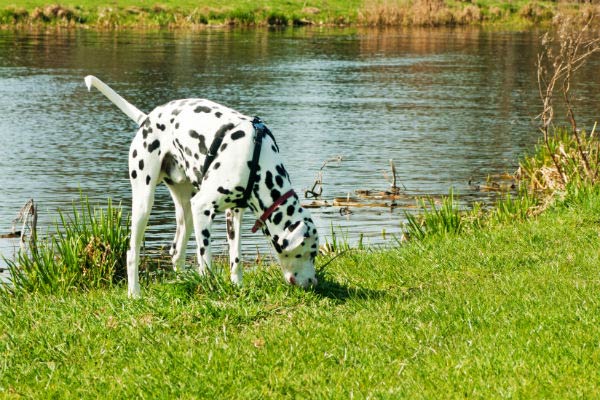
The second method of transmission is through indirect contact. The virus can survive on clothing, equipment, on human skin, and in the environment. Indirect transmission occurs when a puppy comes into contact with a contaminated person, object, or environment.
The parvovirus is a particularly resilient virus. It can survive indoors at room temperature for at least two months and is resistant to many commonly used cleaners and disinfectants. Outdoors, the parvovirus can survive for months, and even years, if protected from direct sunlight. This is why hospital quarantine of the infected dog and proper cleanup of the environment are especially important.
Shoes that have come into contact with infected feces can also bring the virus into a dog’s environment, which is concerning since there is evidence that parvo can live in ground soil for up to one year. If you suspect that you have come into contact with feces at all, you will need to wash the affected area with household bleach, one of the few disinfectants known to kill the virus.
Once a dog has contracted parvo, the virus replicates. This replication takes place in the small intestines, lymphopoietic tissue (lymph nodes, thymus, etc.), and bone marrow. This leads to severe GI problems and in rare cases, myocarditis (inflammation of the heart).
Every dog owner and breeder should know the symptoms of parvo in dogs. The most common symptoms are:
Any or all of these symptoms merit a call to your veterinarian. Even if parvo is not the cause, the symptoms could be the result of another illness that requires veterinary attention.
If you suspect that your dog has parvo, he needs immediate veterinary attention. Parvo is a potentially fatal virus that requires intensive care, and the sooner your canine is diagnosed the better. Your vet will most likely recommend hospitalizing your dog in an isolation ward, where he will offer supportive care and monitor your dog for secondary infections.
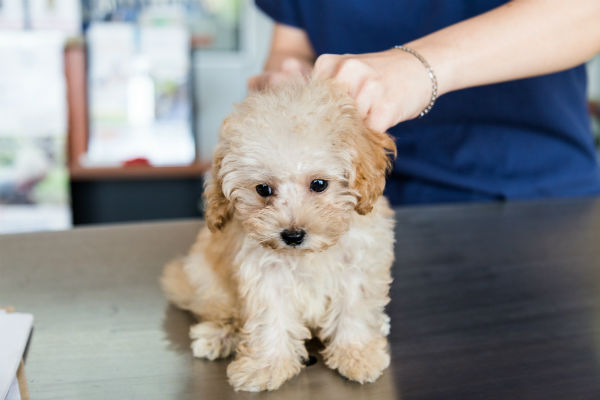
Depending on the severity of the case, your vet may prescribe a series of medications, including antibiotics to prevent bacterial infections from entering your dog through the damaged walls of his intestines. To make matters worse, parvo also reduces your dog’s ability to fight infection by lowering his white blood cell count. Your vet will provide your dog with the supportive fluids, nutrition, and medications that will hopefully save his life, which is why taking your dog to the vet is the best thing you can do for him.
Most puppies that survive the first 3-to-4 days will make a complete recovery, which usually takes around one week. Your vet will walk you through the recovery process and tailor a recovery plan best suited to your puppy’s needs.
Parvo is a preventable disease, but even vaccinated dogs are not 100% protected from the virus. Vaccines for the parvovirus are recommended for all puppies and are usually given in a series of three shots when the pup is between 6-to-8 weeks old, again at 10-to-12 weeks, and at 14-to-16 weeks. A booster shot is administered one year later and every 3 years after that.
Unvaccinated puppies and incompletely vaccinated puppies should not be exposed to unvaccinated dogs or to environments where unvaccinated dogs could have introduced the parvo virus, like dog parks or boarding facilities. While it might be tempting to take your new puppy with you everywhere you go, her health depends on keeping her safe until she is fully vaccinated against this life-threatening disease.
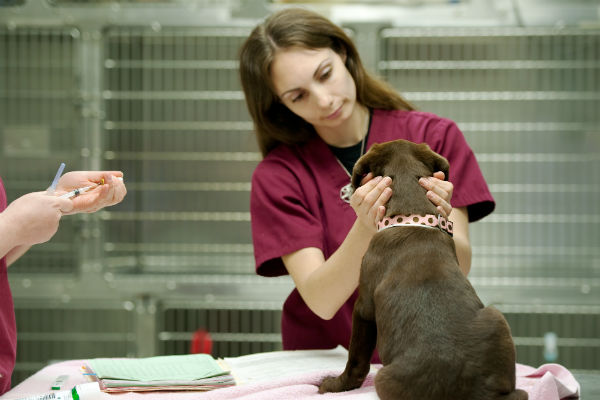
Unvaccinated puppies can be safely socialized with fully-vaccinated adult dogs in safe environments like your home. Most puppy classes require proof of vaccination before you can enroll your puppy. Vaccination reduces the risk of the spread of deadly diseases like parvo, so make sure that you do your research before enrolling your young puppy in a class. Socialization and training are very important for proper development, but it is up to you to make sure your puppy is socialized in a safe environment. A puppy should never be placed in situations such as daycare or training classes until they have completed their vaccines at 14-to-16 weeks of age.
Understanding parvo in dogs is the first step toward preventing the spread of this dangerous virus. Make sure your puppy gets vaccinated at the appropriate ages and protect your unvaccinated and partially vaccinated puppies by keeping them in a safe environment. If you suspect your puppy has parvo, call your vet immediately.
This blog post has been re-posted in order to share information with our community. To view the original post, click here.
Keeping in mind that some community members may be experiencing financial stress during the COVID-19 Pandemic, Gitsegukla Chief and Council have approved payment relief for the month of June 2020 for all tenants in Band Rental Units and Gitsegukla Internet Service subscribers, as detailed below.
We are happy to introduce to our community, our new Health Director at the Gitsegukla Health Center, Julia Sundell. Read more in the pdf posting below…
We are happy to introduce Kyle Munro to our community. Kyle is a Nurse Practitioner, and will be providing his services to Gitsegukla through the Health Center. Read more in the pdf posting below…
Help keep our planet clean and healthy!
Join us in our Earth Day garbage pick up this Wednesday, Thursday, and Friday.
Please separate garbage, wood, and metals and leave them at the curbside to be picked up.
This initiative is to help improve the cleanliness of our community and to promote healthy living for our people and planet!
When: May 20th, 21st, and 22nd.

Please see the following letter from TELUS regarding the COVID-19 situation and the supports offered by TELUS.
Take part in the May self care challenge! Challenge yourself and your family to take part in the slotted activities on this calendar.
Why stop there? Self care may be a challenge at times, but it’s something we all need daily. 🙂

We hope waiving internet and rental payments during the months of April, May, and June assisted in alleviating any hardship that arose due to the COVID-19 Pandemic.Effective July 1, 2020, all regular internet and rental payments will resume.Please contact Administration to make arrangements for payments.
To date, during the pandemic, there has been a distribution of two Meat Packages, four Food Hampers, and two Good Food boxes. Thank you for the feedback from those in receipt of the Food Hampers. This notice is to inform you, that there will be no more Meat Packages or larger hampers distributed… read more […..]

Please remain diligent in protecting yourself, your family and the community. We would like to remind you that there is still risk in traveling outside of the community. Although News outlets have announced that numbers are decreasing, the risk of infection still remains and we ask that for the sake of your loved ones and […..]

Written by Anna Burke at AKC.org Parvo is every new puppy and dog owner’s worst nightmare. In a matter of days, a perfectly healthy puppy can go from playful and active to fatally ill. Parvo in dogs is a preventable disease, however, all new puppy owners and breeders need to be aware of the risks of parvo, how to prevent […..]

Keeping in mind that some community members may be experiencing financial stress during the COVID-19 Pandemic, Gitsegukla Chief and Council have approved payment relief for the month of June 2020 for all tenants in Band Rental Units and Gitsegukla Internet Service subscribers, as detailed below.

We are happy to introduce to our community, our new Health Director at the Gitsegukla Health Center, Julia Sundell. Read more in the pdf posting below…
We are happy to introduce Kyle Munro to our community. Kyle is a Nurse Practitioner, and will be providing his services to Gitsegukla through the Health Center. Read more in the pdf posting below…

Help keep our planet clean and healthy! Join us in our Earth Day garbage pick up this Wednesday, Thursday, and Friday. Please separate garbage, wood, and metals and leave them at the curbside to be picked up. This initiative is to help improve the cleanliness of our community and to promote healthy living for our […..]

Please see the following letter from TELUS regarding the COVID-19 situation and the supports offered by TELUS.

Take part in the May self care challenge! Challenge yourself and your family to take part in the slotted activities on this calendar. Why stop there? Self care may be a challenge at times, but it’s something we all need daily. 🙂
Copyright © 2024 Gitsegukla First Nation. Website by Technology Services Department